

Key Takeaways
Success in a professional trading evaluation requires a blend of disciplined strategy and strict risk controls. Here are the core principles for navigating your path to funded capital:
- Understand the specific drawdown rules and profit targets of your chosen evaluation product.
- Prioritize capital preservation by applying consistent position sizing on every single trade.
- Use simulated environments to refine your strategy before applying for real-market funding.
- Avoid emotional trading by adhering to a pre-defined plan when markets become volatile.
- Focus on long-term consistency rather than chasing immediate, high-leverage gains.
Understanding the mechanics of a prop firm evaluation
Entering a trading evaluation is a systematic test of your ability to manage risk while pursuing gains. These programs assess whether you can operate within established parameters, mirroring the pressures of professional money management environments. By participating in a structure like the prop firm challenge, you prove your capability to handle real capital effectively.
The purpose of the simulated trading environment
Simulation serves as a sandbox for professionalizing your approach without exposing personal savings. It allows for the testing of technical indicators and execution speed in real-time, high-liquidity conditions. This phase acts as a bridge, ensuring that your trading methodology is sound enough to warrant the management of larger account balances.
Analyzing risk management constraints and drawdown limits
Drawdown limits dictate the maximum decline your account can experience before you breach your program terms. It is essential to understand whether these limits are monitored intraday or calculated at the end of the trading day. Maintaining tight risk controls ensures that a single losing streak does not eliminate your progress during the testing period.
Setting realistic profit targets based on account size
Profit targets act as the finish line for your evaluation phase. You must scale your risk appropriately to reach these goals without needing to hit home-run trades. Many traders find success with Elite Trader Funding by treating these targets as reachable milestones that confirm their consistency over time rather than luck.
Choosing the right evaluation product for your style
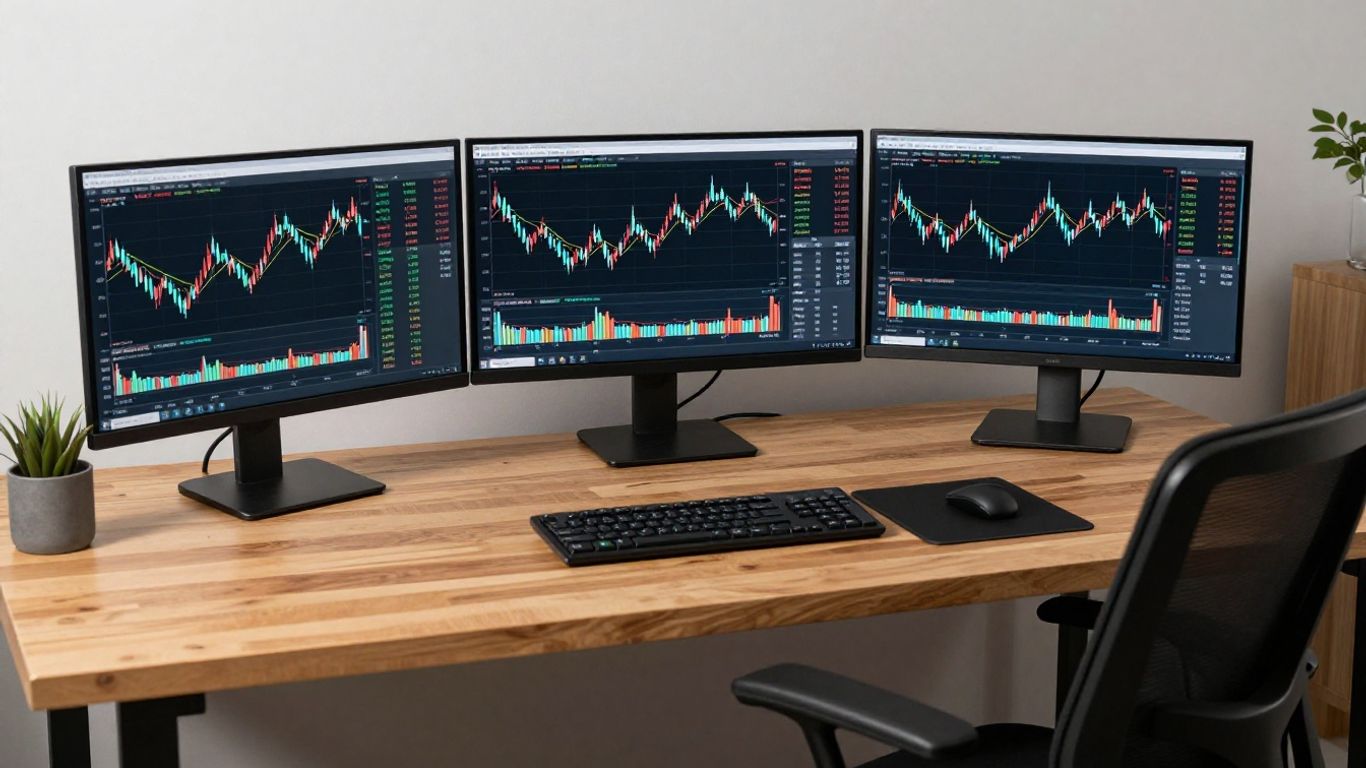
Comparing different evaluation tiers and upfront costs
When reviewing tiers, look beyond the initial entry fee and consider the total cost of ownership.
| Account Size | Evaluation Fee | Profit Target | Drawdown Limit |
|---|---|---|---|
| $10,000 | $100 | $1,000 | $500 |
| $50,000 | $250 | $5,000 | $2,000 |
| $100,000 | $400 | $10,000 | $3,500 |
Reviewing these metrics helps you identify which product aligns with your existing risk appetite and financial commitment levels.
Evaluating the impact of end-of-day versus intraday drawdown rules
Intraday drawdown rules are notoriously strict, tracking the high-water mark of your account throughout the trading day. Conversely, end-of-day drawdowns offer a bit more breathing room by calculating your equity based on the market’s close. You should choose the model that accommodates your preferred style, whether that involves holding positions across volatile windows or scalping short-term moves.
Aligning account capital with your specific trading strategy
If you prefer high-frequency trading, you need an account that supports it without restrictive rules on trade duration. Conversely, swing traders require room to hold overnight positions if the rules permit. Understanding the specific platform options is critical, as you might explore choices offered by FXIFY if your strategy requires more flexible symbol coverage or unique position holding policies.
Developing a robust trading plan for passing
Passing an evaluation demands more than just reacting to price movements. A formal plan provides a checklist for every entry and exit, removing ambiguity during turbulent market conditions. Developing this document is the most significant step toward professional trading.
Defining entry and exit criteria for consistent performance
Your strategy should clearly outline the visual or algorithmic setups that trigger a trade. Establishing rigid stop-loss and take-profit levels in your plan prevents impulsive decisions. By automating parts of your exit, you reduce the strain of watching tick-by-tick fluctuations in equity.
Incorporating technical analysis indicators to gain an edge
Indicators should be used to confirm confluence in your strategy rather than dictate your entire decision-making process. Whether you follow volume profiles, moving averages, or support zones, keeping your charts clean is standard advice in prop firm challenge preparation. Combining too many signals often leads to analysis paralysis, which is counterproductive under tight drawdown constraints.
Managing psychological stressors during high-pressure trading sessions
High-pressure sessions can impact physiological states, leading to overtrading or emotional blowouts. Maintaining mindfulness and physical distance from the desk can help you regain composure. Remember that trading is a long-term endeavor, and losing one day should never jeopardize your entire career trajectory.
Essential risk management techniques for evaluations

Implementing position sizing to protect account equity
Position sizing ensures that no single loss exceeds a safe percentage of your total equity. Below are common practices for maintaining capital integrity:
- Limit every individual trade risk to 0.5% or 1% of the total account volume.
- Never combine multiple high-risk positions that aggregate into a single potential blowout.
- Adjust position sizes according to the volatility of the specific asset being traded.
- Always account for slippage or commission costs in your risk math.
By following these procedures, you build a buffer that allows you to survive even a temporary losing period.
Utilizing stop-loss orders to adhere to firm-specific policies
Automated stop-loss orders are non-negotiable tools that protect your account balances from runaway market moves. These orders ensure that you exit a losing trade precisely at the level you identified during your pre-market analysis. Relying on mental stops is a dangerous habit that exposes users to emotional overrides during fast market action.
Navigating market volatility and news event restrictions
Major economic news events can introduce rapid, irrational price spikes that stop out positions in milliseconds. It is vital to learn which instruments become too volatile to trade during announcements. Checking the economic calendar and knowing when to sit on the sidelines is a mark of a seasoned professional.
Moving from evaluation to funded status
Once you cross the profit target, you transition to a new phase of accountability. This status requires a recalibration of your goals, as the focus shifts from passing a test to maintaining a revenue stream. The transition is designed to prepare you for live market dynamics where real capital is at stake.
Understanding payout policies and profit split structures
Profit splits are the compensation you earn for successfully managing the firm’s capital. Familiarize yourself with the payout frequency—whether it is monthly, bi-weekly, or on demand. Understanding these structures allows you to plan your financial withdrawal goals alongside your growth objectives.
Transitioning from simulation accounts to live capital management
Moving to live capital involves managing the shift in market impact and execution speed. While your strategy remains consistent, the psychological burden changes when trading with real assets. Developing a discipline that ignores the difference between a simulation and a funded environment is the mark of a truly elite trader.
Meeting consistency requirements to maintain and grow funding
Many firms have consistency rules to ensure that traders are not just hitting goals through high-risk gambling. Maintaining a uniform trade size ensures you are eligible for continued funding and potential scale-ups. Focus on long-term portfolio growth rather than chasing massive single-day payouts.
Common pitfalls and how to avoid them
Even experienced traders might stumble when facing evaluation criteria. Being aware of the psychological trap of "chasing" results is perhaps the best protection against early failure.
The danger of over-leveraging to chase profit targets
Over-leveraging creates a false sense of urgency that forces trades that are not truly there. If you find yourself increasing your position size simply to hit a profit number, stop immediately. You are gambling with your career, not trading with a plan; reset your focus to established win rates.
Managing the tendency to trade during non-liquid market hours
Trading when volume is thin is a surefire way to suffer from increased slippage and erratic price gaps. Stick to the primary exchanges during active sessions to ensure you are getting fair executions. Avoiding the "dead" zones of the market saves you from unnecessary volatility that doesn’t provide a reliable statistical edge.
Overcoming the emotional impact of nearing drawdown limits
Nearing your limit is an incredibly stressful experience that can skew your judgment. Should you find yourself close to a breach, take a break from the charts to clear your head. Allowing your ego to prevent a small loss usually results in an even larger one, so trade from a place of logic.
Conclusion
Navigating the path to funding is less about perfect trades and more about maintaining the discipline to play by the rules. With a solid plan and a commitment to risk management, you can transform your strategic approach into a consistent performance that meets professional expectations and unlocks new levels of capital.
Frequently Asked Questions
What is a prop firm challenge?
A prop firm challenge is an evaluation process where individuals trade in a simulated environment to demonstrate their ability to manage risk and hit profit targets before being granted access to funded accounts.
Can beginners participate in evaluation programs?
Beginners can participate, though it is highly recommended to study basic trading principles and risk management techniques thoroughly before attempting an evaluation to ensure a realistic chance of success.
Are evaluation fees refundable upon completion?
Refund policies differ between providers; some firms offer a full refund of the evaluation cost upon successfully reaching funded status, while others treat the fee as a standard access cost.
Is it normal to fail an evaluation on the first attempt?
Yes, it is common even for skilled individuals to fail initially; evaluation environments are set to strict standards, and learning from those failures is a key part of the process.
Do firms monitor my trading habits?
Firms actively monitor metrics such as drawdown, consistency, and risk per trade to ensure traders are adhering to the specific rules set within their individual agreements.
How are payouts managed once funded?
Payouts are typically distributed according to a predetermined profit-split schedule, requiring traders to submit formal requests that are then reviewed against the firm’s compliance and risk guidelines.
What should I look for in a provider?
Look for providers that emphasize transparency, offer clear guidelines regarding their rules and drawdown structures, and maintain a reputation for consistent payouts to their funded traders.
Ready to start your trading journey?
Start testing your skills with an evaluation plan and take the first step towards managing professional capital to get paid for your performance.