

Key Takeaways
This guide outlines the path to becoming a successful funding trader, from understanding the core mechanics of capital distribution to managing risk in a live environment. We provide actionable insights to sharpen your strategy and scale your professional trading career.
- Master core risk management to prevent account breaches.
- Leverage simulated accounts to refine your edge before scaling.
- Understand the transition from simulated to real market capital.
- Utilize consistent metrics for performance evaluations.
- Focus on long-term sustainability rather than immediate gains.
Understanding the funding trader model
Transitioning from independent trading to a professional structure requires a change in perspective. A funding trader operates within a framework established by a firm, combining individual strategy with institutional oversight to achieve consistent growth. This model is built to sustain professional operations while balancing the needs of the firm and the trader.
Definition and role of prop firms
Proprietary trading firms provide the essential capital and technological infrastructure that traders utilize to generate market returns. Instead of risking personal life savings, individuals trade with firm-provided resources, focusing on disciplined execution and strict risk adherence. Elite Trader Funding represents this commitment to backing skilled traders, providing the necessary foundation for serious participants to build their careers without assuming the full financial burden of market participation.
Differences between personal capital and firm capital
Trading with personal money often invites emotional attachment, which can cloud logical execution and distort decision-making during high-volatility events. Conversely, firm capital requires a detached, professional approach where adherence to established drawdown rules is paramount to maintaining access. By separating the trader’s emotional state from the financial outcomes, the firm maintains structural stability while allowing the individual to scale based entirely on merit.
The shift toward performance-based evaluation
Modern prop firms use objective data rather than credentials to identify talent, ensuring that traders who consistently prove their edge get rewarded. This process centers on specific profit and loss targets that measure a trader’s ability to navigate market conditions under real pressure. Firms look for high-level indicators of consistency, favoring those who execute a strategy methodically rather than relying on high-risk, luck-based trades.
Importance of simulated environments for talent identification
Simulated accounts provide the perfect testing ground for talent to demonstrate competence without exposing actual assets to unnecessary risk. This environment functions as an extension of the professional vetting process, designed to strip away the noise of live markets while testing for precision and risk compliance. A simulated model allows traders to prove themselves as reliable stewards of capital before being entrusted with live market obligations.
Navigating the evaluation process

Passing an evaluation is the initial hurdle toward achieving funded status, requiring a blend of technical strategy and emotional regulation. Traders must reach a target profit while proving they can effectively manage their exposure to the market. The process serves as a proof-of-concept for the trader’s individual strategy.
Meeting specific profit targets
Profit targets act as a benchmark to ensure that a candidate’s strategy has sufficient expectancy and statistical edge. Consistency is more important than a single big win; therefore, the focus should always be on repeatable patterns. The goal is not just to hit the number, but to maintain a sustainable growth curve throughout the duration of the evaluation phase.
Adhering to drawdown limitations
Drawdown rules are designed to protect the account from catastrophic loss, forcing traders to stay disciplined with every entry and exit. Failure to manage drawdown often stems from over-risking or ignoring technical signals during periods of high market turbulence. Understanding how your firm calculates drawdown is critical to staying compliant when things don’t go according to plan.
Understanding trading volume requirements
Volume requirements prevent traders from hitting a profit target with a single lucky trade, validating that performance is based on skill rather than chance. Consistent activity ensures that you remain active in the target market, allowing the firm to monitor your performance metrics closely over time. This creates a data set that defines your professional profile.
Selecting the appropriate account size for your skill level
Choosing the right size is about balancing leverage against your personal risk capacity. We have outlined common tier considerations to help you align your goals with the correct capital level for your trading style.
| Account Tier | Risk Capacity | Primary Objective |
|---|---|---|
| Starter Plan | Low Risk | Strategy Testing |
| Pro Plan | Moderate Risk | Consistent Growth |
| Elite Plan | Advanced | Performance Scaling |
Selecting an account size that overwhelms your emotional capacity can lead to poor decision-making and unnecessary breaches. You should opt for a level that matches your current comfort, even if you could theoretically manage more capital.
Essential risk management strategies for funded accounts
Managing risk is the central pillar that determines how long you survive and thrive as a professional trader. Without clear rules, market volatility can quickly strip away account equity regardless of how well you read the charts. True professionals treat trade size not as a suggestion, but as a rigid constraint derived from their account’s current drawdown buffer.
Establishing daily loss limits
Setting a hard limit for daily losses is the most effective safety net for any trader working within a firm’s system. Knowing exactly when to walk away prevents the common tendency to chase losses after a rough morning session. This simple discipline keeps you in the game for the long haul.
Calculating position sizing based on account equity
Your position size should flow directly from the available capital and the distance to your stop-loss order. A consistent approach ensures that a single bad day doesn’t compromise your overall account health or breach your firm’s strict drawdown metrics. Professional traders calculate the risk per trade before they ever execute a single order.
Balancing aggressive growth with principal protection
Every trade is a choice between potential gain and the preservation of your funded privilege. By keeping your risk low during uncertain news events and leaning into high-probability scenarios, you align your aggressive ambitions with the necessary safety measures that protect your account. The smartest growth is often the steadiest.
Monitoring real-time drawdown metrics
Real-time monitoring tools provide a constant pulse on your account’s health, allowing you to make micro-adjustments before a standard stop-loss becomes a major violation. Staying aware of how far you are from the firm’s drawdown limits is a necessary part of your daily routine. Vigilance here ensures you never leave your career to chance.
Choosing the right prop firm for your goals
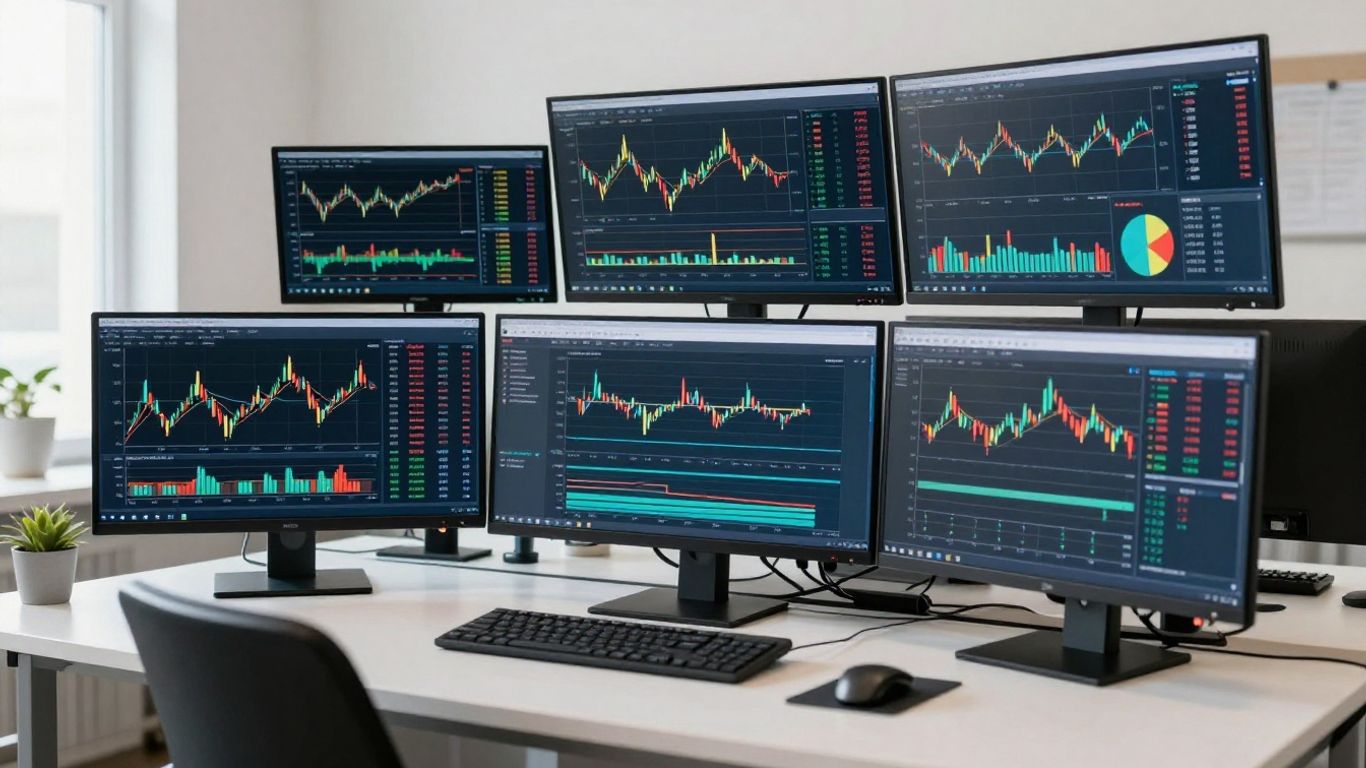
Finding the right firm is a personal decision that depends heavily on your expectations regarding payouts and platform tools. A firm that aligns with your specific trading style can provide the support needed to scale your operations effectively. Look for transparency in costs, rules, and history.
Analyzing payout policies and withdrawal frequency
Understanding how a firm processes payouts, including minimum balance requirements and timing, dictates your cash flow strategy. Some firms offer daily payouts or have internal windows that permit faster access to earned funds. Reviewing these constraints beforehand ensures that when you hit your performance targets, you can access your earnings without unnecessary administrative friction.
Comparing platform and market support
Your trading platform acts as your visual interface to the live market, so compatibility with your preferred indicators and tools is essential. A futures prop firm will usually support industry-standard platforms that provide high-speed data feeds to ensure that your execution is never delayed during critical sessions.
Evaluating consistency requirements and trading rules
Rules regarding order types, daily limits, and news trading vary significantly across different firms. You should prioritize an organization that enforces consistency without over-regulating your strategy, ensuring your natural edge remains intact. It is helpful to review the terms and conditions to ensure their philosophy matches your specific requirements.
Investigating firm reputation and payout history
Reputation is built on consistent actions and the ability to demonstrate that payouts are delivered exactly as promised. Traders often look for community trust and transparent proof that the firm has sustained operations over several years. A track record of success implies that the firm views you as a partner, not just a line item in their accounting software.
Avoiding common pitfalls in funded trading
Even experienced traders can stumble when they find themselves under the pressure of managed capital. Identifying these common errors early can save you from unnecessary resets and frustration. Focus on the process rather than the final payout check.
Managing psychological pressure under evaluation constraints
When a large sum represents your potential future earnings, the psychological stakes skyrocket, leading to decision fatigue or hesitation. Recognize that the system was designed to test your mental resilience as much as your technical knowledge. Maintaining your routine is the best antidote to the pressure of strict evaluation milestones.
Overleveraging trades to meet profit targets quickly
Impatience is the quickest way to end a funded career; doubling down to reach a target faster usually results in a catastrophic breach. Markets have a way of punishing those who rush. Stick to your risk plan even when the finish line feels slow to approach.
Neglecting news events and market volatility
Major announcements like central bank interest rate decisions can generate sudden, massive spikes in volatility that can trigger stop-losses instantly. Ignoring these events is dangerous if your trading strategy is not built to handle sudden price gaps or extreme slippage. Keep a schedule of major releases pinned to your desk.
Failing to review performance metrics regularly
Journaling your trades is the only way to identify whether your wins come from luck or a reproducible process. Without constant review, you are essentially flying blind, unable to fix the small leaks in your strategy before they grow into large losses. Self-reflection is a must for any trader seeking true longevity.
Transitioning from simulation to live capital
Moving to live capital is the ultimate milestone of a funded trader, shifting from proof-of-capability to direct institutional market participation. This step requires an even tighter adherence to risk controls as you handle real capital. It is here that your previous training becomes the bedrock of your professional behavior.
Moving to elite funded status
Elite status serves as the final validation of your discipline and consistency in the firm’s ecosystem. At this tier, traders gain access to broader tools and are treated with higher levels of responsibility. It is the natural culmination of a long journey marked by consistent results and careful risk monitoring.
Aligning performance with institutional risk controls
Institutional capital requires strict, standardized behavior that minimizes deviation from the established strategy. When you handle real funds, your risk management parameters are no longer suggestions but requirements dictated by the firm’s operational stability. You must mirror the exact protocols used by large-scale market participants.
Establishing institutional-grade trading discipline
True professionalism means showing up to the market with a cold, calculated plan every single day. This discipline allows you to execute your strategy regardless of how you feel, ensuring that your output matches the expectations of an institutional firm. You are now a representative of the firm’s operational philosophy.
Leveraging performance bonuses and long-term scaling opportunities
Consistent profitability opens doors to long-term growth and increased capital allocation beyond what initial tiers afford. Successful traders often receive access to performance-based bonuses, creating a pathway to high-level trading achievements with uncapped profit potential. This is where your career moves into high gear.
Conclusion
Becoming a professional in the futures space involves a dedicated focus on risk mitigation and psychological maturity that goes far beyond just reading the charts. By starting with a clear evaluation path and maintaining institutional standards throughout your journey, you can turn your strategy into a genuine, long-term source of income while trading with firm capital.
Frequently Asked Questions
How does the assessment process evaluate my strategy?
Proprietary firms typically review your trading performance based on pre-set parameters like daily loss limits, maximum drawdown, and consistency metrics to ensure your success is repeatable rather than a result of chance or extreme risk.
What happens to a trade if I break a rule?
If you breach a core rule defined by your account agreement, your trading account is generally flagged for review or automatically closed, preventing further market access until you reset or qualify for a new evaluation.
Can I hold my positions through the night?
Trading rules regarding overnight holding periods vary by firm and account setting; some allow it for certain instruments, while others mandate closing all positions before the market close to minimize overnight volatility risk.
Why do firms care about news events?
Market-moving news events introduce sudden liquidity changes and volatility that can cause significant slippage, making it difficult for traders—and firms—to manage stop-loss orders effectively and prevent account breaches.
What is the advantage of a sim-funded account?
These accounts serve as a bridge, allowing traders to prove their consistency under real-market conditions without the immediate psychological stress of managing live capital, which helps bridge the gap between testing and professional institutional funding.
Do I need to be a full-time trader to succeed?
Success in this space is defined by consistency rather than the time of day you trade, provided your strategy functions effectively within the hours you can commit and you respect the firm’s specific trading protocols.
How do I maintain consistency over long periods?
Maintaining a rigorous trade journal, reviewing performance daily, and refusing to deviate from your established risk management plan even after a string of losses are the primary methods for ensuring long-term profitability.