

Key Takeaways
Entering free trading competitions allows traders to test strategies, gain market confidence, and potentially earn rewards without upfront costs. Consider these primary benefits and strategies for your journey:
- Competitions provide a risk-free environment to validate your trading edge.
- You can practice risk management against real market conditions.
- Prizes often include cash or access to discounted evaluation accounts.
- Reviewing specific rules is critical for success in every challenge.
- Transitioning to a paid evaluation is the necessary step toward obtaining real capital.
1. Why traders should enter free prop firm competitions
Entering a prop firm competition free is a smart way to test your skills in a high-pressure environment without risking your own capital. These events simulate the conditions of a professional evaluation, allowing you to gauge your ability to hit profit targets while staying within drawdown limits. By observing how you handle market volatility under strict constraints, you can identify whether your current strategy is truly ready for a live-funded scenario.
Participation also offers a unique chance to compare your performance against a community of peers. Seeing where you rank on a leaderboard can be an eye-opening experience, providing a reality check on your consistency compared to other traders. It helps remove the isolation often felt by individual traders, connecting you to a platform where you can witness the performance of others directly in real time.
Finally, these competitions serve as a training ground for professional discipline. The pressure to climb the ranks forces you to adhere to your risk management plan, which is essential to earn with our funds in the long term. Even if you do not win a podium spot, the experience gained in staying disciplined within the rules is a valuable asset that will serve you well when you move to a funded account at Elite Trader Funding.
2. Top platforms offering free entry competitions
Identifying the right platforms is key to getting the most out of your practice. While many websites advertise free trials, it is vital to discern which ones are genuinely open competitions versus basic demo accounts that lead to aggressive marketing. A platform that runs a structured, regularly scheduled competition is generally a sign of a commitment to community development rather than just customer acquisition.
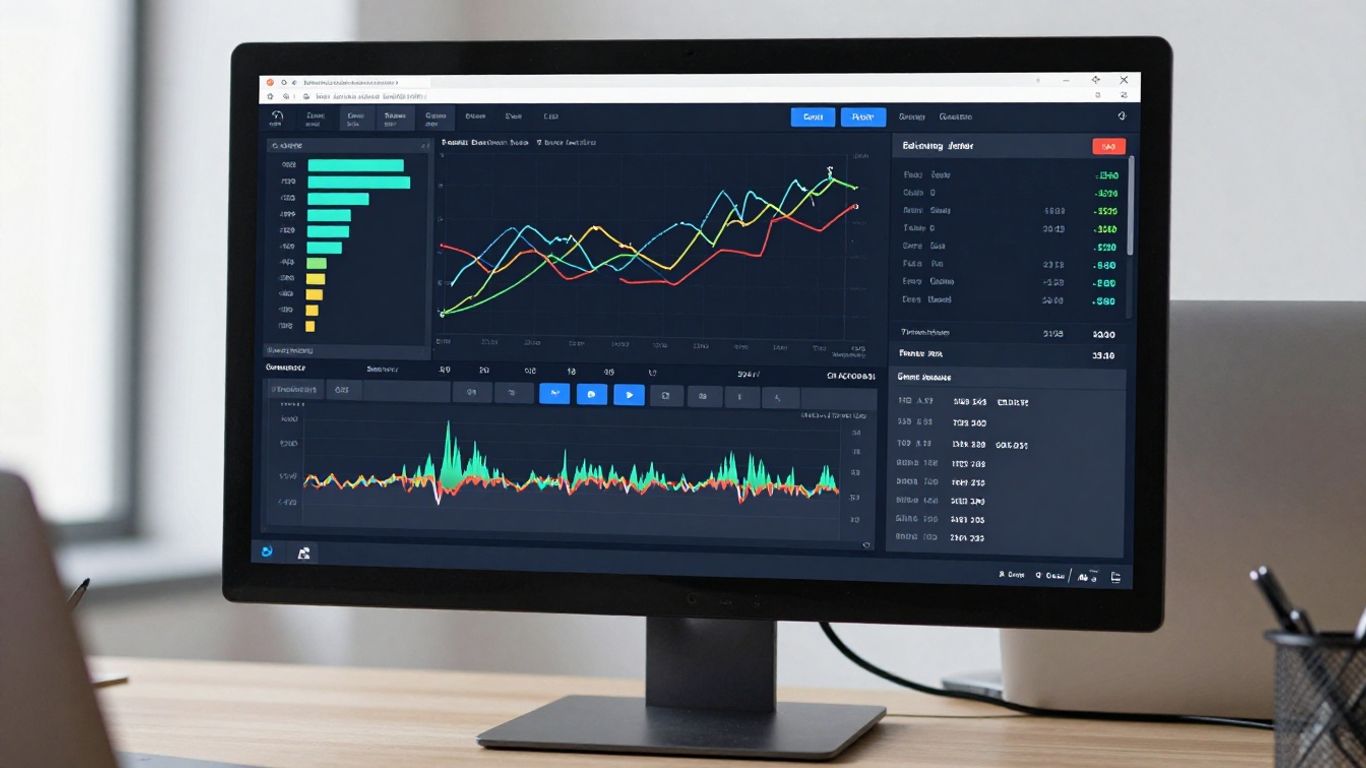
Some platforms utilize advanced technology to host these events, ensuring the rules are enforced fairly across all participants. You can often find firms that partner with established tech providers to build out these experiences. For instance, Swiset offers specialized technology to help firms launch these branded events, which is why you will often encounter professional-grade dashboards in well-run contests.
When exploring these platforms, look for transparent rules that protect against manipulation and ensure that the competition remains a test of skill. The most reliable firms are those that clearly state the reward structure and the specific conditions required to qualify. Whether you are looking for cash prizes or entry into Elite Trader Funding evaluations, the top-tier platforms provide clarity so you can focus entirely on your trade execution.
3. How to maximize your chances of winning a free challenge
Winning a contest requires a sharp focus on consistency rather than gambling for large wins. Successful traders in these competitions often avoid the temptation of over-leveraging their positions to jump to the top of the leaderboard. Instead, they treat the competition account like a long-term professional account, meticulously watching their drawdown thresholds until the final days of the event.
To increase your probability of success, you should create a specific plan for the tournament. Many traders find that following a daily routine helps them maintain focus regardless of market news or volatility. Consider the following structural approach:
- Develop a set daily profit goal to avoid greed.
- Trade only during your most effective market hours.
- Log every single trade to identify pattern mistakes.
- Maintain a strictly defined maximum loss per day.
After setting this up, monitor your performance against the competition’s specific rules. Maintaining a logical approach means you won’t get carried away when a trade goes your way or become overly emotional when a trade hits your stop loss. Discipline at this stage is a preview of the mindset required to pass an evaluation when real market capital is on the line.
4. Comparing prize pools in popular free trading contests
Prize pools vary significantly, ranging from small cash tokens to fully funded accounts. It is important to read the fine print regarding these prizes, as some firms offer cash upfront, while others offer a waiver or a discount for a future evaluation. Recognizing the value of a prize depends largely on your goals; a cash prize provides immediate liquidity, whereas a funded account offer provides a bridge to potential professional results.
| Prize Type | Benefit | Primary Use |
|---|---|---|
| Cash Reward | Immediate capital | Personal savings |
| Evaluation Credit | Lower entry cost | Testing your strategy |
| Funded Account | Live trading potential | Generating real income |
As shown in the table above, the utility of the prize dictates whether a competition is worth your time. If a firm offers a large cash prize but implies a very low probability of actually being able to trade their capital in a real market, it may have less long-term value than a smaller prize from a firm known for transparency. Always weigh the prize against the time investment necessary to win it.
Comparing these structures helps you decide where to dedicate your energy. Some platforms have monthly cycles that award cash to the top hundred traders, which keeps the engagement high, while others focus on a smaller, winner-take-all format. Finding a balance that matches your current skill level and available time will ensure you do not burn out while seeking an evaluation plan that fits your career goals.
5. Understanding the rules and terms of free prop firm competitions
Navigating the rules for a competition is a vital task that separates the winners from early disqualifications. Every firm has its own distinct "rulebook," covering everything from the maximum allowable drawdown to whether you are permitted to trade through scheduled news events. Never assume that the rules for one contest apply to another simply because they look similar on the surface.
One common area of confusion involves the handling of simulated versus real capital rules. In many cases, the competition rules are designed to be stricter than standard evaluation criteria to ensure that the winner is truly disciplined. This might include limits on how many contracts you can hold or specific requirements for the minimum number of active trading days you must log during the event.
If you find yourself confused by a clause, the best path is to contact their support team before you place your first trade. Firms that value their reputation will usually have an accessible FAQ or support desk. Understanding these terms completely is part of the professional development process, helping you transition toward your futures trading journey with confidence and regulatory clarity.
6. The risks and limitations of free trading challenges
Despite the excitement of a free competition, there are inherent risks and limitations you must consider. A major drawback is that these contests do not always reflect real-market friction, such as liquidity constraints or execution speed during high-volatility events. Even if a platform attempts to mirror the market, the environment remains a simulation that is designed for competition rankings, not necessarily for professional market depth.
Practicing your edge in a competitive format is valuable, but remember that the scoreboard is not a proxy for the actual market conditions you will face when managing firm funds.
Furthermore, participants often fall into the trap of "gamification." When traders focus entirely on winning the competition, they may engage in behaviors they would never use with their own money, like holding positions way past their logical exit point in a desperate attempt to crack the top ten. This behavior, if not contained, can bleed into your actual trading habits.
These challenges are a tool, not a mirror of your eventual success. The limitation lies in the fact that they are just a test of a single strategy against a specific time limit. While they offer a glimpse into your potential, they cannot replace the years of steady, patient risk management required to effectively trade a funded trading account in the real world.
7. Moving from free competitions to paid evaluations
Once you have found success in a competition, the logical final step is to move toward a professional evaluation. This transition is essential because it introduces the formal risk controls and payout models that define the industry. You will be trading with a clear objective—reaching a profit target while respecting drawdown limits—under conditions that are closer to those of a live prop trader.
Choosing a firm for your first paid test should involve the same level of due diligence you used for the free challenges. Look for providers that focus on your growth, offer clear profit splits, and have a proven record of supporting their traders with daily payouts. A high-quality evaluation provider acts as a partner, ensuring you have the data and support required to succeed as you grow your accounts.
If you feel ready for this step, start by selecting a plan that matches your current risk tolerance and account size goals. Do not feel rushed; even if you start with a smaller challenge, the goal is to establish a foundation that allows you to eventually qualify for more advanced accounts. As you take this next step, remember that steady progress is more sustainable than rapid growth.
Conclusion
Participating in free prop firm competitions is an excellent way to hone your skills and test your trading strategies without financial risk. By treating these events as a professional discipline and carefully selecting your platforms, you can gain valuable experience while working toward your goal of securing a funded trading account. Focus on consistency over short-term gains, and ensure you are moving toward a legitimate partner who supports your long-term success in the markets.
Frequently Asked Questions
Are free prop firm competitions actually free?
Yes, legitimate competitions do not require any payment to enter. Be wary of any offer that asks for a registration fee or insists that you link a payment method to participate.
Can I win a real-money funded account from a contest?
Most competitions offer cash prizes or discounts on evaluation accounts rather than instant funding. You typically need to pass a standardized evaluation phase afterward to unlock a funded account.
Do competition rankings guarantee future success?
Competition results are not a guarantee of future performance. They are simply a tool to help you measure your discipline and strategy execution against a set of rules.
How many traders usually participate in these events?
Participation levels vary by firm, with some established contests attracting thousands of traders. High participation makes the leaderboard competition quite intense.
Can I use the same strategy in a competition as a live account?
You should absolutely use your core strategy, provided it follows the competition’s rules. If you do not have a proven strategy before entering, use the contest to build and test one.
What happens if I violate a rule during a competition?
Most platforms handle rule violations by automatically disqualifying your account for that specific competition. This ensures fairness for everyone else on the leaderboard.
Should I enter multiple competitions at once?
It is generally better to focus on one competition at a time. Trying to manage multiple accounts with different sets of rules often leads to mistakes and poor risk management across the board.