

Key Takeaways
Becoming a professional futures trader involves passing a simulated challenge to prove your edge before managing capital. Balancing profit targets with risk management is essential for long-term consistency.
- Start by choosing an evaluation plan aligns with your strategy and goals.
- Maintain strict risk limits to avoid hitting maximum drawdown milestones.
- Prioritize platforms that provide reliable market data and order execution.
- Understand that simulated challenges are a gateway to real-market performance.
- Treat each evaluation attempt as a learning opportunity regardless of the outcome.
Understanding the prop firm evaluation process
Proprietary trading firms offer a clear pathway to demonstrate your market expertise without risking your own capital immediately. By participating in an evaluation, you prove that your strategy is repeatable, sustainable, and capable of handling market volatility while remaining within set risk parameters. These firms are looking for disciplined traders who treat the market as a profession rather than a gamble, focusing on long-term sustainability over quick, high-risk wins.
The purpose of simulated trading environments
Simulated trading environments act as a controlled laboratory for testing your execution skills and psychological resilience. They provide a space to execute trades as if you were in the real market, ensuring that the firm can observe how you handle risk without exposing actual capital to unnecessary danger. This stage is crucial because it allows the firm to verify your consistency and rule adherence before transitioning you to advanced accounts.
Reaching profit targets vs. managing risk
Successfully balancing growth with capital preservation is what separates professionals from hobbyists. While hitting a profit target is the primary goal to pass your evaluation, failing to manage the downside, often referred to as a drawdown limit, will result in an automatic reset or failure. Focusing on risk first ensures you stay in the game long enough to eventually meet those targets, keeping your performance steady even when the market moves against your initial analysis.
Navigating different evaluation account sizes
Choosing the right account size requires a realistic assessment of your current capital and risk tolerance levels. Larger accounts often require higher profit targets and carry more substantial risk limits, which can be tempting but dangerous if your strategy is not sized correctly. Assessing your trading needs with Elite Trader Funding allows users to select programs ranging from smaller, manageable sizes up to significant capital tiers.
Setting up your trading environment
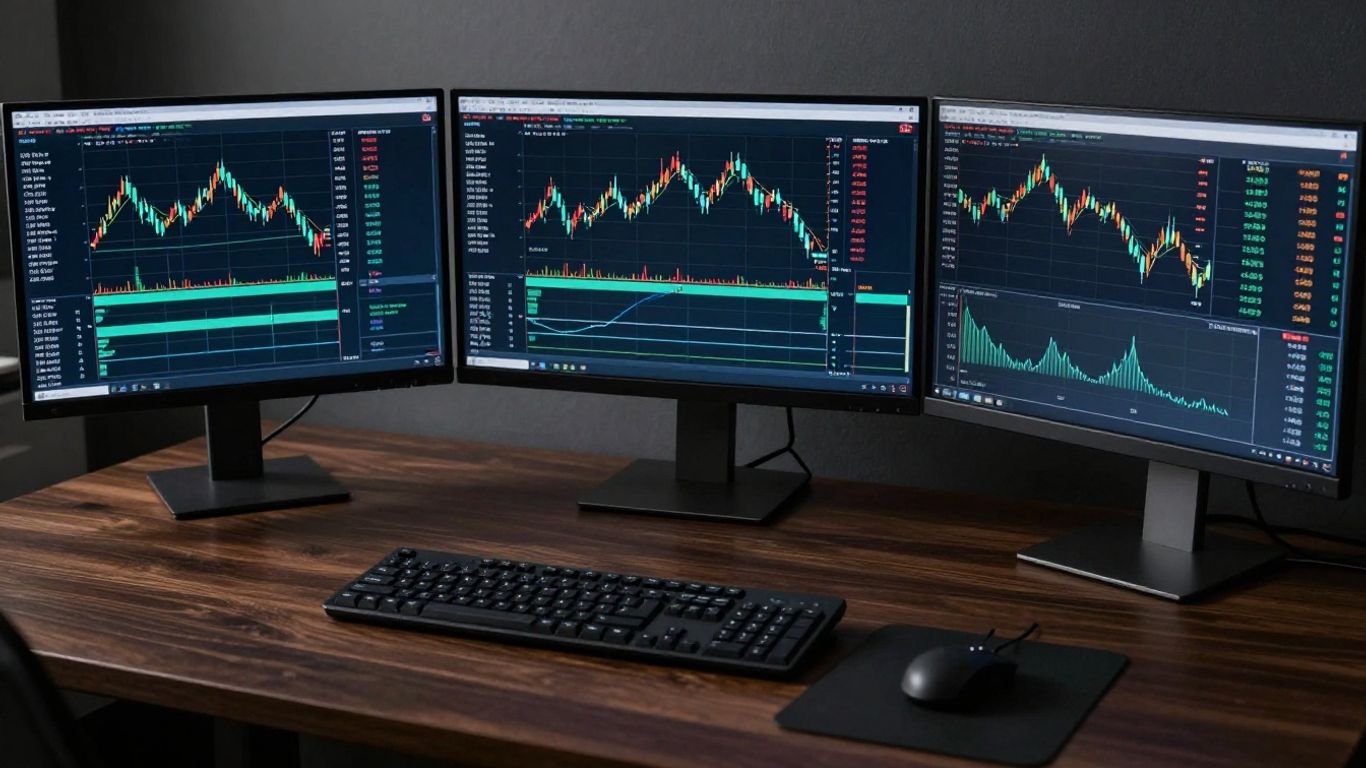
Your workstation serves as the foundation for your daily success, acting as the interface between your strategy and the market. Ensuring that this environment is optimized for speed and clarity drastically reduces the chance of technical errors during critical trade execution. Consistency in your setup helps maintain focus, allowing you to react quickly to shifting charts without second-guessing your connection or software functionality.
Selecting the right trading platform
Using a platform you trust is paramount, as you need to be familiar with the interface to manage entry and exit orders flawlessly. You can explore a variety of Elite Trader Funding’s add-ons to customize your workflow and gain more control over your trading experience, ensuring that your tools align with your specific style. A platform that feels like an extension of your own thought process effectively lowers your mental load.
Configuring technical market data for success
Technical data must be accurate and provided in real-time to prevent slippage and ensure your charts reflect current price action. Relying on stale or delayed data serves only to undermine your decision-making, which is why professionals prioritize stable, professional-grade connections from their data providers. When you set up your feeds correctly, you avoid the common trap of missing entries or exiting trades at the wrong levels.
Ensuring consistent internet and hardware reliability
Stability is the silent partner of every winning trade. A hardwired internet connection is far superior to Wi-Fi for trading, as latency can be the difference between a filled order and a missed opportunity during high-volume periods. Backing up your hardware with redundant systems ensures that a singular power or connectivity dip does not compromise your entire evaluation standing.
Managing drawdowns and risk metrics
Risk management is the heartbeat of any trading system, dictating how long you survive in the market and how effectively you recover from losses. Understanding how your firm defines drawdown is the first step toward building a sustainable career, as it defines your hard limits. Many traders choose to utilize a table like the one below to compare typical risk constraints found in various evaluation programs.
| Evaluation Type | Drawdown Style | Risk Focus |
|---|---|---|
| Standard | Trailing | Max Daily Loss |
| EOD Plan | End of Day | Static Protection |
| Static Plan | Fixed Limit | Account Cushion |
After reviewing the drawdown style associated with your chosen firm, you can effectively adjust your daily order sizes to ensure you never exceed your account’s capacity. Managing these metrics helps you maintain a calm temperament, which is vital when you face an inevitable string of market losses.
Defining trailing vs. static drawdown limits
Trailing drawdown limits adjust based on your unrealized profits, which can be tricky to manage as your account balance grows. Conversely, static drawdown limits remain fixed at a set distance from your starting capital, providing a more predictable cushion for some trading styles. Knowing your limit ensures you choose a plan that fits your risk-taking comfort level.
Implementing strict stop-loss orders
Stop-loss orders are the most effective way to automate your exit when a trade fails to go as planned. By placing a stop-loss at entry, you define your maximum potential loss per trade before the deal is ever executed. This discipline is a core component of professional trading and serves as your final insurance against unexpected market spikes.
Calculating position sizing based on account equity
Size your positions according to your equity, not your ambition. Over-leveraging on a small account is the fastest way to hit your drawdown limit, while proper sizing allows for a statistical edge to play out over a long series of trades. Consistently assessing your total equity ensures that your position size remains proportional and manageable.
Transitioning from simulation to live performance
Moving into a funded account is a major milestone, but it requires a shift in mindset as you now balance the need for profit with the pressures of real capital. The path to becoming a funded trader typically follows a structured progression that recognizes your skills in increasingly realistic settings. Success here is not about hitting grand slams but about maintaining the performance that earned you your spot.

Understanding payout policies and request cycles
Payout schedules vary significantly between firms, so reading the terms and conditions about request frequencies is a necessary habit. Most firms have a clear process that includes verification steps, so it pays to be prepared with your documentation ready. Maintaining a clear understanding of when you can request your hard-earned profits helps you manage your personal finances more effectively.
Qualifying for live capital accounts
Qualifying for a live funded account generally follows a distinct set of professional milestones. Typically, the process involves:
- Proving consistent profitability during initial simulated performance phases.
- Adhering to all risk management and drawdown rules without violation.
- Undergoing a formal account review by the firm’s risk management team.
- Meeting minimum trade count or day duration requirements if specified.
Following these steps ensures that you are ready for the responsibility of handling real capital and that your trading habits are fully aligned with the firm’s standards.
Strategies for maintaining performance under pressure
Performance degradation often occurs when the "real money" factor changes a trader’s internal state. Strategies like reducing your leverage during your first weeks in a funded account can help maintain your composure. Staying within your established rule set, even when feelings of excitement or fear arise, is the only way to demonstrate long-term viability as a funded trader.
Selecting the best prop firm for your goals
Finding a firm that matches your long-term vision requires evaluating more than just the surface-level cost of an evaluation. Consider the firm’s reputation, the clarity of their rules, and their overall mission in helping traders develop their edge. A good firm acts as a partner, providing the support you need to refine your strategy rather than just seeking your subscription fee.
Comparing profit split percentages
Profit splits define what portion of the earnings stays with you versus the firm, and competitive firms often offer splits that reward your performance handsomely. While high splits are attractive, ensure that the rules attached to them are realistic and transparent. Look for firms with long-standing payout histories, as this is the best indicator that their profit splits are sustainable and reliable.
Analyzing consistency and trading style rules
Consistency requirements are firm-specific rules intended to prevent a single lucky trade from carrying you through an evaluation. Some firms require that you spread your gains across multiple trades, while others set limits on the maximum percentage a single day contributes to your profit target. Understanding these rules early allows you to align your strategy accordingly.
Verifying payout history and community reputation
Check community Discord channels and independent review platforms to see if traders are actually receiving their funds regularly. A firm with a track record of transparent payouts often fosters a loyal community, which you can participate in to share strategies and growth tips. Real testimonials are your best tool for uncovering whether a firm genuinely cares about their traders’ success.
Avoiding common pitfalls for new traders
Even experienced traders can fall into traps when starting with a new prop firm. Avoid these by maintaining your documentation of trades and regularly auditing your performance. Most errors made by new traders are psychological in nature, stemming from a desire to scale too quickly or a failure to admit when a losing streak requires a tactical pause.
Over-leveraging during volatile market conditions
Market volatility is a double-edged sword, offering high profit potential if you are right, but guaranteeing swift ruin if you are wrong. New traders often make the mistake of increasing their position size when they see price action explode, only to be wiped out by a retracement. Disciplined traders know that higher volatility often demands smaller position sizes to account for wider stops.
The importance of avoiding emotional trading
Trading from an emotional state is the fastest way to lose your account, particularly when you are chasing losses or trying to force a winning day. When you feel frustration, anger, or extreme overconfidence, the most professional thing you can do is close your charts and walk away. Protecting your mental bandwidth is just as important as protecting your capital.
Learning from failure and re-attempting evaluations
Failing an evaluation is not a sign that you are a bad trader; it is often the most valuable feedback you will ever receive. Analyze your logs to see exactly where your risk management broke down, understand the emotional trigger behind the failure, and develop a plan to fix it. True growth comes from your ability to iterate on your strategy, come back stronger, and re-attempt your target with refined focus.
Conclusion
Navigating the path to funding requires patience, discipline, and a thorough understanding of the specific rules governing your chosen account. By focusing on risk management first and allowing your strategy to unfold in a controlled environment, you set yourself up for a successful transition to live trading. Keep your long-term goals in sight and stay committed to the process of continuous improvement.
Frequently Asked Questions
What does an evaluation actually prove?
An evaluation is a structured test that demonstrates your ability to trade consistently while adhering to strict risk management rules and hitting specific profit milestones. It effectively separates traders who have a repeatable edge from those who rely on high-risk, volatile strategies.
Can I use automated trading systems?
Rules regarding automation depend entirely on the specific firm you choose. While some firms allow semi-automated tools to assist with monitoring or order placement, fully automated "set-and-forget" systems are often prohibited because firms want to observe your manual decision-making process.
What happens if I hit the maximum drawdown limit?
Reaching your maximum drawdown limit generally triggers a failure state for the evaluation account, requiring you to reset or start a new challenge. It is designed to act as a hard stop to prevent further risk and ensure that the trading strategy stays within the firm’s tolerance for loss.
Do I need to be a professional trader to pass?
You do not need to be a seasoned professional, but you must be willing to learn and consistently apply risk management principles. Many traders gain their necessary experience by using the evaluation process as a training tool to standardize their reactions to market risks.
How long does the evaluation process take?
There is no fixed time limit for completion as long as you follow the firm’s rules and continue trading. Some traders reach their targets in a few days through high-probability setups, while others take weeks or months; the speed of your progress is secondary to the quality of your risk management.
What is a trailing drawdown?
A trailing drawdown is a risk limit that adjusts upward as your account balance increases, based on your unrealized profits. It is designed to secure a portion of the equity you have built up, ensuring that as you become more profitable, the firm’s threshold for closing the account follows your performance.
Can I trade multiple accounts at once?
Most firms allow you to hold multiple evaluation accounts simultaneously, provided that you can manage the combined risk and follow the rules for each. You should check the firm’s specific policy on account merging or capacity limits if you intend to scale your operations significantly.